
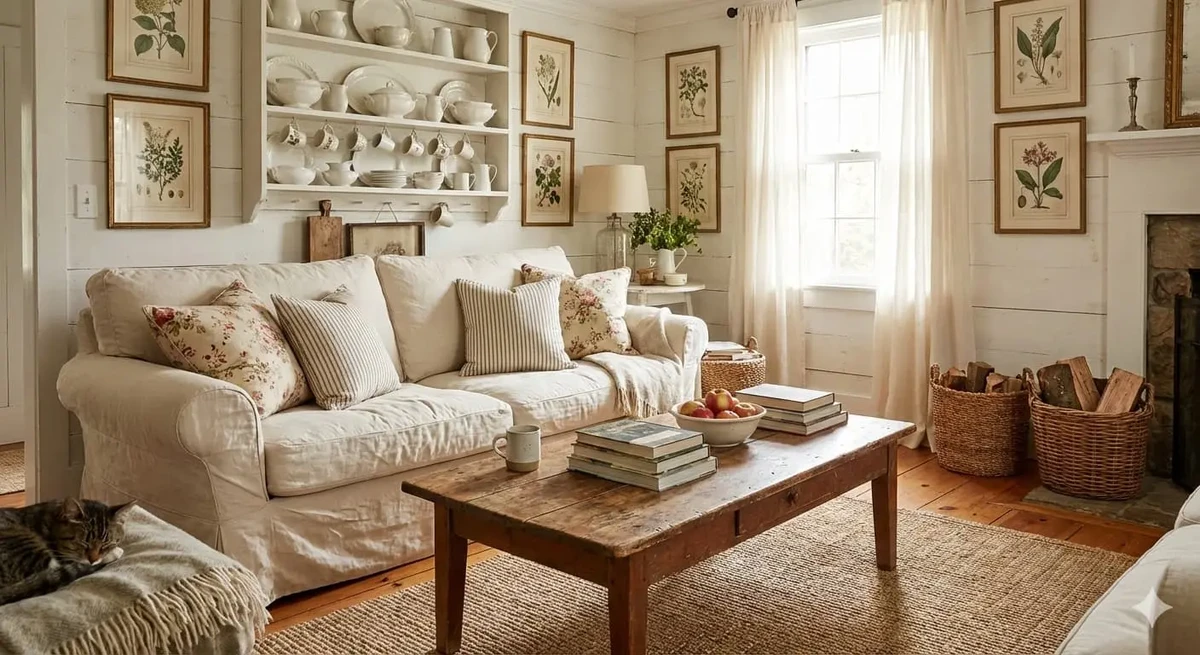
LittleCozyDen.com – Natural materials such as wood, stone, linen, wicker, and terracotta have become fundamental in achieving the cozy, textured, and authentic atmosphere that defines cottage decor. These materials not only bring warmth and tactile richness to interiors but also create a tangible connection to nature, a core element in cottagecore and modern farmhouse aesthetics. Integrating these elements thoughtfully enhances the ambiance by layering textures, employing earthy color palettes, and incorporating vintage or handmade accents, which together foster a sense of comfort and timelessness.
Wood remains the cornerstone of cottage interiors, offering structural warmth and visual interest through exposed beams, weathered furniture, and reclaimed flooring. Its versatility spans rustic pine beams to finely crafted vintage cabinets, providing both durability and character. Stone surfaces, whether in fireplace surrounds or accent walls, contribute a tactile solidity and natural color variation that complements softer textile layers. Linen and cotton fabrics bring breathable softness to upholstery, curtains, and bedding, adding a subtle tactile contrast to the harder surfaces. Wicker and rattan, found in baskets and furniture, introduce organic shapes and weave textures that enhance the rustic charm. Terracotta planters and clay accents serve as earthy focal points, their warm orange hues and matte finishes grounding botanical displays and soft textiles.
Cottagecore and modern farmhouse styles embrace these natural materials as part of their defining features. Cottagecore prioritizes a nostalgic, whimsical connection to nature, often blending vintage furniture with botanical elements like dried flowers and pinecones. It favors soft, muted earthy palettes—sage greens, soft browns, and cream tones—that echo natural surroundings. Modern farmhouse design, while sharing the rustic foundation, leans toward cleaner lines and a balance between vintage and contemporary elements. Both styles use natural textures to evoke authenticity and comfort, with a strong emphasis on sustainability and the use of reclaimed or locally sourced materials.
Practical applications of natural materials in cottage decor reveal numerous opportunities for personalization and authenticity. Sheepskin throws and furniture coverings, whether genuine or high-quality faux alternatives, add plush texture and warmth, perfect for layering over wooden chairs or sofas. Terracotta planters introduce natural clay textures that complement both indoor and outdoor botanical displays, enhancing air quality and visual appeal. Organic decor items such as driftwood, coral, and pinecones serve as sculptural accents, adding dimension and storytelling to spaces. Incorporating vintage or foraged items, like weathered wood furniture or antique baskets, introduces history and uniqueness, connecting the homeowner’s story to the decor. Photographers like Kelly Lawson have documented such interiors, capturing the tactile richness and layered textures that define these styles, while brands like Antique Farmhouse specialize in curating authentic pieces that embody these principles.
Layering textures and colors is essential to cultivating a cozy ambiance within cottage interiors. Combining soft textiles such as linen curtains and wool cushions with harder natural surfaces like stone hearths and wooden floors creates a balanced sensory experience. Botanical touches, including dried flowers and fresh houseplants, bring life and color variations, complementing the earthy palettes. Floral patterns, often subdued and vintage-inspired, weave into upholstery and wallpapers to enhance the organic theme without overwhelming the natural simplicity. Intentional layering also applies to lighting; soft, diffused light accentuates textures and materials, reinforcing the inviting atmosphere.
Seasonal and regional considerations play a significant role in selecting and adapting natural materials for cottage decor. In colder months, heavier fabrics like wool and sheepskin become indispensable for warmth, while terracotta and dried floral arrangements offer enduring natural beauty. Warmer seasons invite lighter cottons and linens, alongside fresh botanical displays and natural fiber rugs. Regional vernacular materials add authenticity and sustainability, with local stones, woods, and fibers reflecting the environment’s character. For example, cottages in coastal regions might utilize driftwood and rattan more prominently, while inland properties could emphasize pinecones, dried wildflowers, or reclaimed barn wood. This contextual approach ensures that interiors remain grounded and relevant to their surroundings.
Budget-friendly and DIY approaches to natural-material cottage decor enable wider accessibility without sacrificing style or authenticity. Simple DIY projects such as crafting wreaths from dried flowers and pinecones, wrapping vases with natural rope, or upcycling thrifted vintage furniture allow homeowners to personalize their spaces sustainably. Using found objects like driftwood or coral salvaged from local environments adds unique story elements while minimizing environmental impact. Moreover, sourcing secondhand items through antique shops or online marketplaces aligns with the sustainability ethos while offering distinctive textures and histories. These approaches demonstrate that natural-material cottage decor can be both attainable and deeply meaningful.
| Material | Characteristics | Common Uses in Cottage Decor | Aesthetic Contribution |
|---|---|---|---|
| Wood | Durable, versatile, warm tones, can be weathered or polished | Furniture, beams, flooring, accent walls | Structural warmth, rustic authenticity, visual texture |
| Stone | Solid, tactile texture, natural color variation | Fireplace surrounds, countertops, accent walls | Earthy grounding, tactile contrast to soft textiles |
| Linen & Cotton | Breathable, soft, natural fibers | Curtains, upholstery, bedding, cushions | Softness, tactile layering, casual elegance |
| Wicker & Rattan | Lightweight, woven texture, organic shapes | Baskets, chairs, light fixtures | Natural patterning, rustic charm |
| Terracotta | Matte finish, warm earthy tones, porous | Planters, decorative accents | Organic warmth, grounding color accent |
| Sheepskin | Soft, plush, insulating | Furniture throws, rugs, cushions | Luxurious texture, cozy warmth |
The above table summarizes the key natural materials integral to cottage decor, highlighting their physical properties and aesthetic roles.
Incorporating these materials not only aligns with current sustainable interior trends but also fulfills the user’s desire for a home that is both stylish and meaningful. Designers emphasize that the tactile experience created by layering natural textures fosters emotional comfort and visual interest simultaneously. Judith, a renowned cottage owner known for her authentic rustic interiors, often integrates found natural elements alongside Antique Farmhouse pieces to enrich her spaces with narrative depth. Photographers like Kelly Lawson capture these interiors in natural light, showcasing how texture and material interplay contribute to a lived-in, welcoming feel.
The future of cottage decor is poised to embrace even greater sustainability and personalization through natural materials. Advances in eco-friendly textile production and reclaimed material sourcing will expand options for conscientious consumers. Meanwhile, digital platforms enable wider access to expert advice and inspiration, encouraging DIY customization that reflects individual stories and local environments. Homeowners seeking to deepen their connection to nature through design will find that intentional use of wood, stone, linen, and other organic materials remains the most effective strategy for creating timeless, cozy interiors.
Tuck Studio’s guide on natural materials offers practical insights for integrating these elements, while Homes & Gardens details stylistic approaches that complement cottage aesthetics with current design trends.
FAQ

What are the best natural materials to use in cottage decor?
The best natural materials for cottage decor include wood for furniture and structural elements, stone for fireplaces and accent walls, linen and cotton fabrics for softness, wicker and rattan for woven textures, terracotta for planters, and sheepskin for plush warmth. These materials bring tactile richness and authenticity to interiors.
How can I layer textures effectively in a cottage interior?
Layering textures involves combining soft fabrics like linen and wool with harder surfaces such as wood and stone. Adding botanical accents like dried flowers and houseplants enhances visual interest. Use varied textiles in upholstery, throws, and rugs alongside natural materials to create a cozy, balanced ambiance.
Are vintage and foraged items suitable for natural-material cottage decor?
Yes, vintage and foraged items are highly suitable as they add history, uniqueness, and sustainability to the decor. Weathered wood furniture, antique baskets, driftwood, and pinecones introduce narrative depth and authentic texture, aligning perfectly with cottagecore and rustic styles.
How do seasonal changes influence the choice of natural materials?
Seasonal changes affect material choices by encouraging heavier textiles like wool and sheepskin in colder months, and lighter linens and fresh botanicals in warmer seasons. Terracotta and dried flowers provide year-round natural accents, while regional materials ensure environmental appropriateness and authenticity.
Can DIY projects help incorporate natural materials into cottage decor?
DIY projects are an excellent way to personalize cottage decor using natural materials. Simple crafts such as dried flower wreaths, rope-wrapped vases, and thrifted furniture restoration allow for sustainable, budget-friendly customization while enhancing texture and authenticity.
Natural materials will continue to shape the evolution of cottage decor, offering sustainable, tactile solutions that foster comfort and connection to nature. Homeowners and designers alike benefit from embracing these elements with intentionality and creativity, ensuring interiors that are both beautiful and enduring.