
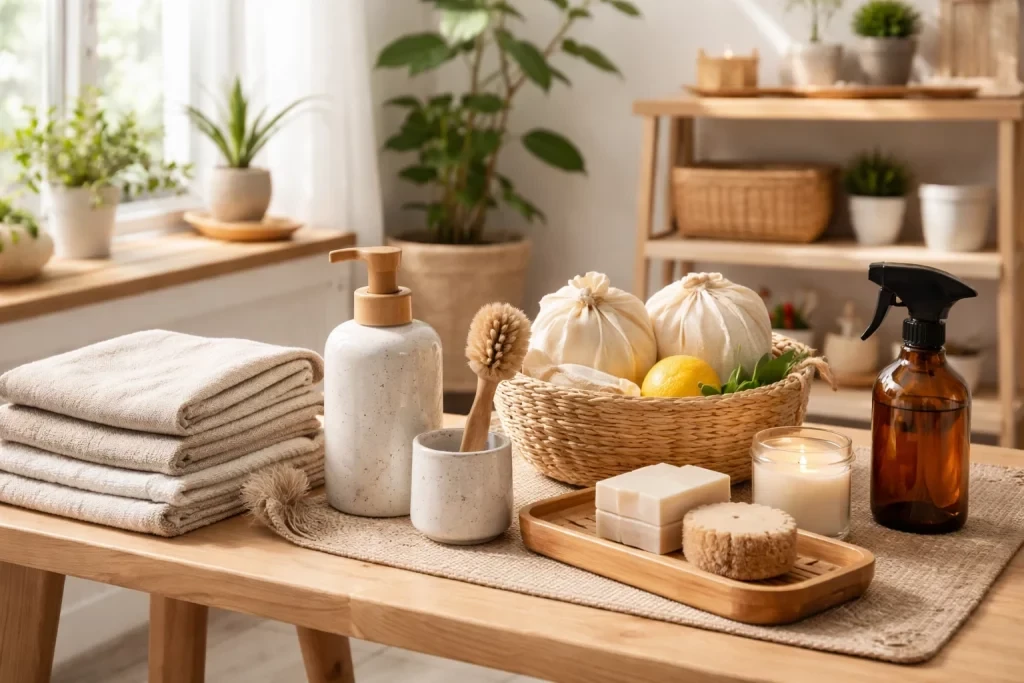
LittleCozyDen.com – Sustainable home products and materials for cottages are rapidly gaining prominence as eco-conscious living reshapes residential design. Bamboo furniture, reclaimed wood, cork insulation, and recycled metal fixtures stand out as key components that significantly reduce environmental footprints while enhancing the aesthetic and functional qualities of cottages. These materials not only support circular economies by minimizing waste but also foster local craftsmanship and social sustainability. Innovations such as Portland limestone cement, which cuts carbon emissions by about 10%, and passive-house cottages by GO Logic, which achieve up to 80% energy savings, exemplify the integration of sustainable construction with advanced energy efficiency.
The movement toward sustainable cottages reflects a broader shift in building and interior design, emphasizing renewable, biodegradable, and non-toxic materials. The rise of biophilic design principles and minimalist aesthetics further complements these materials by promoting natural light, earthy colors, and multifunctional handcrafted furnishings. This article provides an in-depth exploration of the best sustainable home products and materials for cottages, their environmental benefits, real-world applications, and how they contribute to healthy, durable, and climate-resilient living environments.
Key Sustainable Building Materials for Cottages
bamboo furniture exemplifies sustainability through its rapid renewability and strength. Bamboo grows up to four times faster than traditional hardwoods, making it an ideal resource for eco-friendly furnishings. Its tensile strength rivals steel, ensuring durability for cottage furniture and fixtures. Bamboo is also biodegradable and non-toxic, aligning with the growing demand for health-conscious interiors. Modern cottage designers increasingly favor bamboo for chairs, tables, and cabinetry, often sourced from responsibly managed plantations that support local economies.
Cork and hempcrete offer natural insulation and construction alternatives that reduce reliance on synthetic materials. Cork, harvested from the bark of cork oak trees without harming the tree, provides excellent thermal and acoustic insulation. Its cellular structure traps air, delivering an R-value comparable to synthetic foams but without toxic off-gassing. Hempcrete, a composite of hemp fibers, lime, and water, is lightweight, breathable, and carbon-negative due to hemp’s capacity to sequester CO2 during growth. Hempcrete walls regulate indoor humidity, preventing mold growth and contributing to healthier indoor air quality.
Reclaimed wood supports circular economy principles by repurposing timber from deconstructed buildings or sustainably salvaged sources. Using reclaimed wood reduces deforestation and landfill waste while adding unique character to cottages. Furniture and flooring crafted from reclaimed wood exhibit rich textures and patinas unattainable with new materials. Coastal Cottage of Amelia and Modern Mill (ACRE) are notable for their artisan-crafted reclaimed wood products, emphasizing transparency in sourcing and craftsmanship.
Natural stone and earth blocks provide thermal mass that stabilizes indoor temperatures, reducing heating and cooling demands. Materials like granite, slate, and sandstone are abundant regionally, enabling local sourcing that cuts transportation emissions. Straw bale insulation, with an R-value approximately three times higher than conventional fiberglass batt insulation, offers a biodegradable and renewable alternative. Straw bale walls also provide excellent fire resistance and soundproofing, enhancing cottage comfort and sustainability.
Portland limestone cement is an innovative alternative to traditional Portland cement, reducing carbon emissions by roughly 10%. This material blends limestone with clinker, requiring less energy to produce and generating fewer greenhouse gases. While still maintaining structural integrity, Portland limestone cement supports sustainable construction practices. Its adoption in cottage foundations and masonry aligns with broader decarbonization efforts in the building industry.
Sustainable Interior Design Trends for Cottages in 2026
The minimalist “less but better” philosophy drives sustainable cottage interiors by prioritizing quality, multifunctional furnishings over mass-produced decor. This approach reduces material consumption and waste while enhancing spatial efficiency. Handcrafted furniture by local artisans blends functionality with artistic expression, promoting social sustainability and preserving cultural heritage.
Biophilic design, emphasizing connections to nature, integrates natural elements such as indoor plants, natural stone surfaces, and wood textures into cottage interiors. Large windows maximize natural light, reducing electricity use and enhancing occupant wellbeing. Earthy color palettes inspired by natural stone, cork, and wood create calming environments consistent with eco-friendly living principles.
multi-functional furniture addresses spatial limitations common in cottages while minimizing excess furnishings. For example, bamboo chairs that fold or tables with built-in storage exemplify this trend. Coastal Cottage of Amelia specializes in eco-friendly handcrafted decor that combines aesthetic appeal with sustainable sourcing.
Supporting local artisans extends beyond materials to social sustainability. Local craftsmanship reduces transportation emissions and strengthens regional economies. It also ensures that products are repairable, extending lifecycle and reducing landfill contributions. This trend aligns with circular economy principles, moving away from disposable consumer culture.
Energy Efficiency and Eco-Home Models
GO Logic’s passive-house cottages exemplify cutting-edge energy efficiency by reducing energy consumption by up to 80% compared to conventional homes. These cottages employ rigorous airtight construction, high-performance insulation, and heat recovery ventilation systems. Customizable eco-friendly cladding options include natural stone and recycled metal fixtures, enhancing both sustainability and aesthetic appeal.
Passive-house design also prioritizes natural temperature regulation through strategic window placement, overhangs, and shading to minimize heat gain in summer and maximize solar gain in winter. Straw bale and hempcrete insulation contribute to this thermal performance by maintaining stable indoor temperatures and reducing reliance on mechanical heating and cooling.
Low-maintenance native landscaping surrounding cottages further reduces ecological footprints by limiting irrigation and fertilizer use. Native plants adapted to local climates require less water and chemical inputs while supporting biodiversity. This landscaping approach complements sustainable building materials to create holistic eco-home environments.
Circular Economy and Longevity in Cottage Products
Circular economy principles underpin the longevity and sustainability of cottage products. Materials and furnishings designed for repairability, recyclability, and compostability reduce waste and resource depletion. Modern Mill’s ACRE boards, crafted from rice hulls, exemplify closed-loop manufacturing by utilizing agricultural byproducts in durable, biodegradable building panels.
Recycled metal fixtures sourced from scrap metals minimize reliance on virgin mining and reduce landfill waste. These fixtures often feature finishes that extend lifespan and facilitate repair, supporting circularity. ethical sourcing and transparency in supply chains ensure that materials are obtained responsibly, respecting environmental and social standards.
Longevity also derives from the durability of natural materials such as reclaimed wood and bamboo, which withstand wear better than many synthetic alternatives. This durability translates into long-term cost savings and fewer replacement cycles, further reducing environmental impact.
Practical Benefits and Environmental Impact
Sustainable home products and materials contribute substantially to carbon emission reductions across the cottage lifecycle. Portland limestone cement lowers embodied carbon in foundations and masonry, while passive-house design cuts operational energy use by up to 80%, significantly reducing greenhouse gas outputs. Straw bale insulation sequesters carbon as it biodegrades, adding to the net environmental benefit.
Supporting local artisans and sourcing materials regionally reduces transportation emissions and strengthens community economies. This fosters social sustainability and preserves traditional craftsmanship. Non-toxic materials like cork, hempcrete, and bamboo improve indoor air quality by eliminating harmful volatile organic compounds (VOCs) common in synthetic products.
Durability and energy efficiency translate into financial savings for cottage owners through reduced maintenance and utility costs. Eco-friendly furnishings often require less chemical cleaning and are more resilient to wear, decreasing long-term expenditure. These benefits collectively make sustainable cottage living both environmentally and economically advantageous.
| Material | Environmental Benefit | Key Property | Example Use |
|---|---|---|---|
| Bamboo | Renewable, biodegradable, low-impact harvesting | High tensile strength, fast growth | Furniture, cabinetry |
| Cork | Biodegradable, non-toxic, sustainable harvesting | Thermal and acoustic insulation | Insulation panels, flooring |
| Reclaimed Wood | Waste reduction, circular economy support | Unique textures, durable | Furniture, flooring |
| Straw Bale | Biodegradable, carbon sequestration | High R-value insulation | Wall insulation |
| Portland Limestone Cement | Lower carbon emissions (~10% reduction) | Structural integrity, reduced clinker content | Foundations, masonry |
| Recycled Metal Fixtures | Reduces mining impact, landfill waste | Durable, repairable | Hardware, fittings |
FAQ
What are the most sustainable furniture materials for cottages?
Sustainable cottage furniture materials include bamboo, reclaimed wood, and cork. Bamboo is rapidly renewable and strong, reclaimed wood minimizes deforestation and landfill waste, and cork offers biodegradable, non-toxic insulation and flooring solutions.
How do passive-house cottages reduce energy consumption?
Passive-house cottages reduce energy use by up to 80% through airtight construction, high-performance insulation like straw bale or hempcrete, heat recovery ventilation, and strategic design for natural temperature regulation including window placement and shading.
Why is Portland limestone cement considered more sustainable than traditional cement?
Portland limestone cement emits approximately 10% less carbon than traditional Portland cement because it incorporates limestone, which requires less energy to process, reducing clinker content and associated greenhouse gas emissions without sacrificing structural strength.
How does sourcing materials locally benefit sustainable cottage building?
Local sourcing reduces transportation emissions, supports regional economies, and promotes social sustainability. It also enables better quality control and ensures materials align with regional environmental conditions and biophilic design principles.
Are straw bale walls suitable for all climates?
Straw bale walls provide excellent insulation and are highly effective in temperate and cold climates due to their high R-value and moisture regulation. In wetter climates, proper plastering and moisture barriers are essential to prevent degradation.
Sustainable home products and materials for cottages are transforming how eco-conscious homeowners approach construction and design. Their integration supports climate impact mitigation, fosters local artisan economies, and creates healthier living spaces. As sustainable interior design trends evolve toward minimalism and biophilic principles, these materials contribute to cottages that are both environmentally responsible and aesthetically compelling. The future of cottage living lies in embracing renewable resources, circular economy models, and energy-efficient technologies to ensure resilient, low-impact homes.
For further reading on sustainable interior design trends and eco-friendly building materials, consult Reimagine Home’s 2026 sustainable interior design insights and detailed analyses of cottage building materials at Cottage Life’s environmental building materials guide.